What is an Excavator Auger?
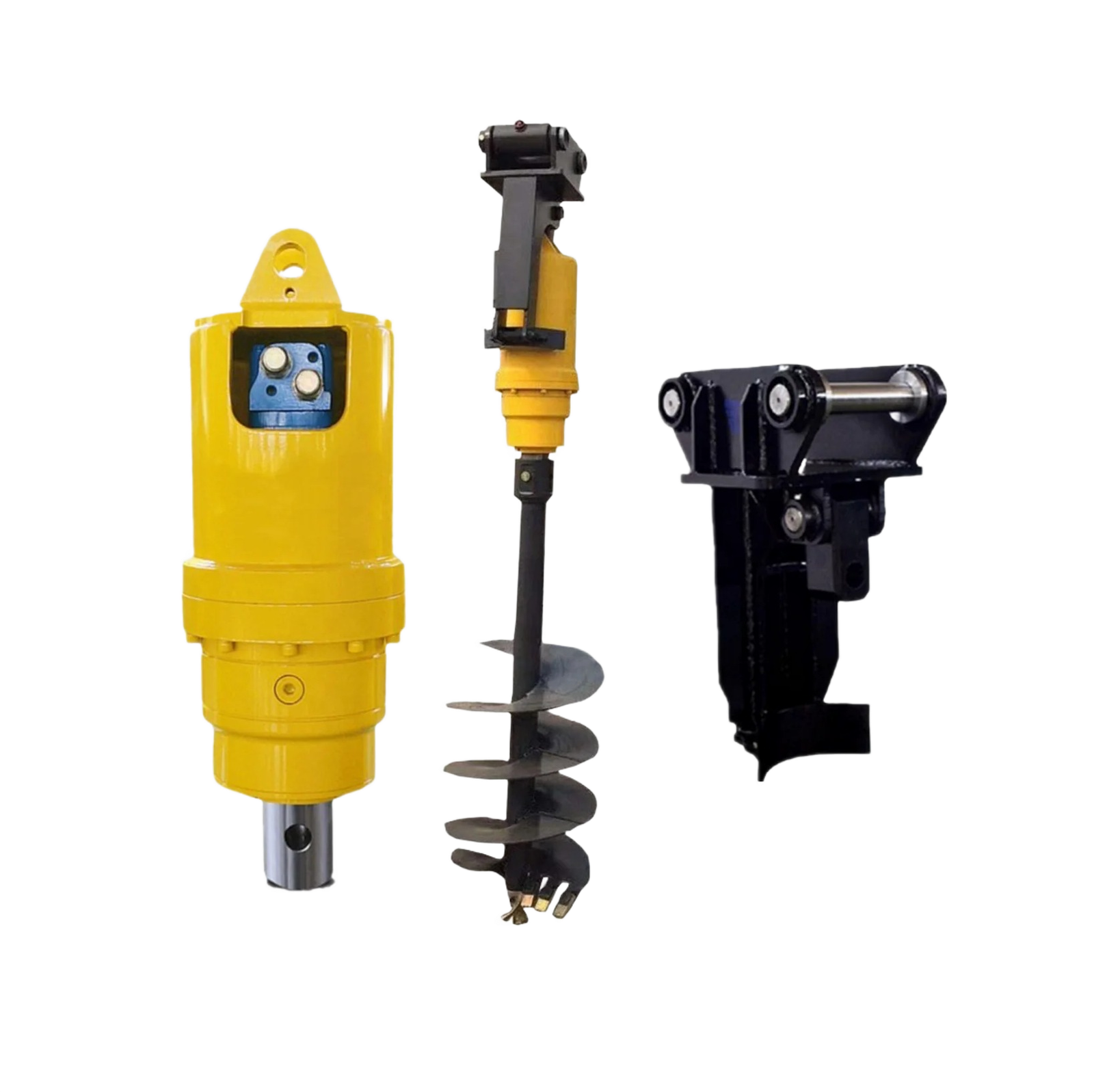
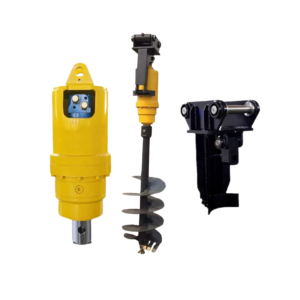
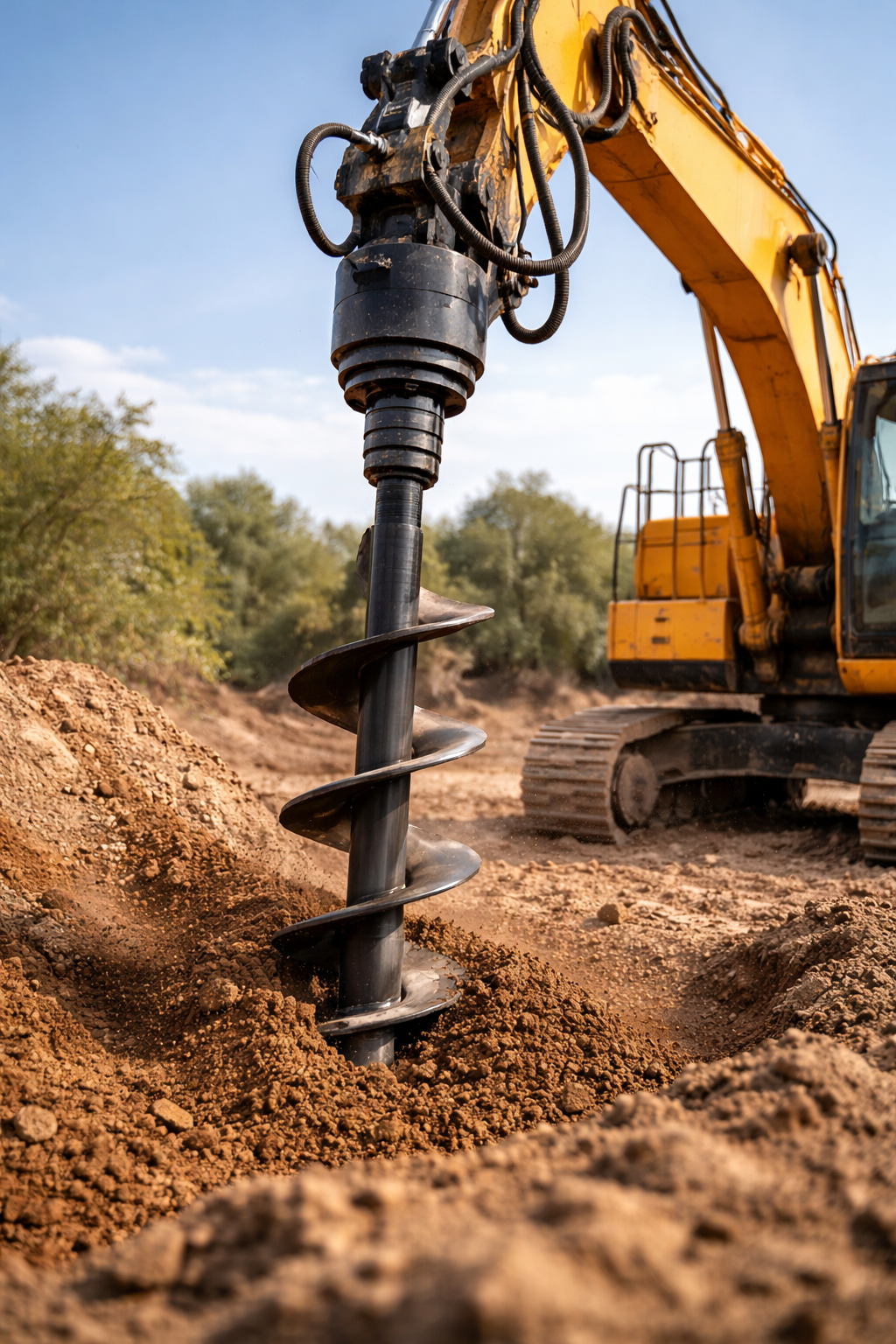
An excavator auger is a specialized attachment designed to enhance the capability of standard excavators by enabling them to drill into various types of soil and earth materials. Fundamentally, an auger functions as a drilling tool featuring a helical screw blade, allowing for the efficient removal of soil during the drilling process. The design of an excavator auger typically incorporates a robust steel construction that is capable of withstanding the wear and tear associated with heavy-duty applications.
The main components of an excavator auger include the drill bit, extension shafts, and a drive mechanism. The drill bit is the point of contact with the earth, responsible for penetrating the surface and efficiently excavating the material outwards. Extension shafts allow for varying depths of drilling, enabling operators to reach deeper layers of soil without needing to reposition the excavator. The drive mechanism, often powered hydraulically, connects the auger to the excavator arm, propelling it forward and rotating it to facilitate the drilling action.
The mechanics of how an excavator auger operates are relatively straightforward. Once attached to the excavator, the operator can control the rotation speed and directional movement, allowing for precise drilling. Its versatility is one of the auger’s key advantages, as it can be used for a variety of applications including digging holes for fence posts, planting trees, and installing foundations. Excavator augers are adaptable to different sizes and torque requirements, with specifications that vary to suit specific tasks. They are available in multiple diameters, enabling them to handle both small-scale drilling tasks and larger, more demanding jobs.
Applications of Excavator Augers
Excavator augers are versatile attachments that significantly enhance the capabilities of excavators, making them essential tools in various construction and landscaping projects. One of the most common applications of excavator augers is digging post holes for fencing. Whether for residential properties or large-scale agricultural projects, augers allow for precise and efficient hole digging, accommodating different post sizes and spacing requirements. This not only speeds up the installation process but also ensures that the posts are installed firmly and at the correct depth.
Another significant application lies in creating foundations for buildings. Excavation operators utilize augers to drill deep and wide holes, forming the necessary footings for various structures. The ability to adjust the auger size and type according to soil conditions helps ensure stability by reaching the required load-bearing strata. This adaptability is crucial, especially in areas with varying soil types such as clay, sand, or loam. Understanding the soil composition allows contractors to choose the right auger and drilling technique, optimizing foundation integrity.
Excavator augers are also invaluable in drilling for underground utilities. Projects involving the installation of water lines, sewer systems, and electrical conduits often require precise auger drilling to maintain the integrity of existing infrastructures. The careful assessment of soil types and project scale plays a critical role in determining the auger specifications required. The use of augers minimizes ground disturbance and can be adapted for both small residential projects and large commercial installations, proving their effectiveness across various applications. The flexibility and efficiency of excavator augers make them indispensable in modern construction practices.
Advantages of Using Excavator Augers
Excavator augers offer a multitude of advantages over traditional digging methods, significantly enhancing efficiency and precision in various earth-moving tasks. One of the primary benefits is the speed at which augers can complete digging projects. Unlike manual labor, which can be time-consuming and physically demanding, excavator augers allow for rapid penetration into the ground, facilitating swift excavation of holes for foundations, utility lines, or landscaping features.
Another notable advantage is the precision that auger attachments provide. The design of excavator augers ensures that holes are drilled to the desired depth and diameter without the risk of excessive earth disturbance. This precision minimizes the need for additional site cleanup and helps to maintain the structural integrity of surrounding land, which is particularly beneficial in residential or public spaces.
When it comes to safety, excavator augers significantly reduce the risk of injuries commonly associated with manual digging. Operators can perform tasks from the comfort of the excavator’s cab, eliminating exposure to several hazards associated with traditional digging, such as repetitive strain injuries, falls, and contact with underground utilities.
Moreover, the adaptability of excavator augers to different terrains sets them apart from conventional digging methods. They can effectively penetrate rocky, sandy, or clay-rich soils, ensuring that excavation work can continue regardless of sub-surface conditions. Augers can also be tailored with different drill sizes and attachments, making them versatile for various applications, from small landscaping projects to larger construction endeavors.
In conclusion, the utilization of excavator augers presents numerous advantages, including enhanced efficiency, precision, improved safety, and adaptability to diverse terrains, making them an invaluable tool for modern excavation and construction tasks.
Choosing the Right Excavator Auger
When selecting an excavator auger for a specific project, it is crucial to consider several key factors to ensure maximum efficiency and effectiveness. The first aspect to evaluate is the auger size. Augers come in various diameters, ranging from small units suitable for fencing installations to larger models ideal for drilling deep holes for foundations. The size of the auger should align with the requirements of the project, as a correctly sized auger can significantly reduce project time and labor costs.
Another critical factor to consider is the compatibility of the auger with different excavator models. Not all augers can be used with every machine, so it is essential to verify that the auger is suitable for the specific excavator being utilized. This involves checking the hydraulic flow requirements, the mounting options, and any necessary adapters to ensure seamless integration. Understanding the capabilities of the excavator will ultimately guide the selection process, ensuring that the auger can perform optimally.
Additionally, the type of ground conditions plays a pivotal role in auger selection. Different soils require different auger designs; for instance, a standard earth auger may suffice for soft, loamy soil, while a rock auger is necessary for hard, rocky terrains. In some cases, using an improper auger type can lead to equipment damage or project delays. It is advisable to consult local geological surveys or engage with professionals familiar with the site conditions before making a purchase.
Furthermore, best practices suggest considering features such as pilot bits, which are essential for stabilizing the auger in tough ground conditions, or the choice of materials used in the auger’s construction, which can influence the tool’s durability and lifespan. By thoroughly assessing these factors, operators can select the right excavator auger to achieve optimal results in their endeavors.